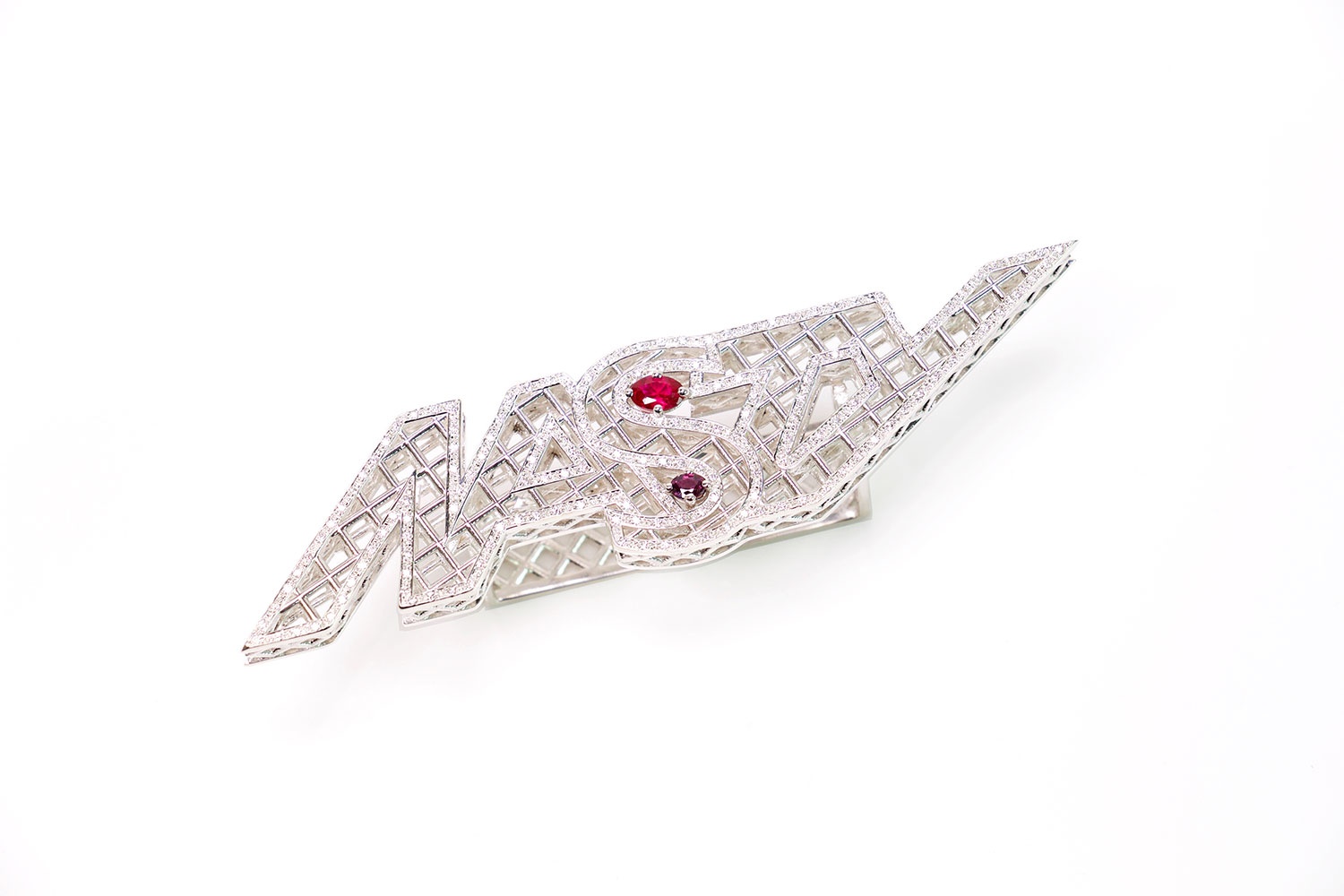
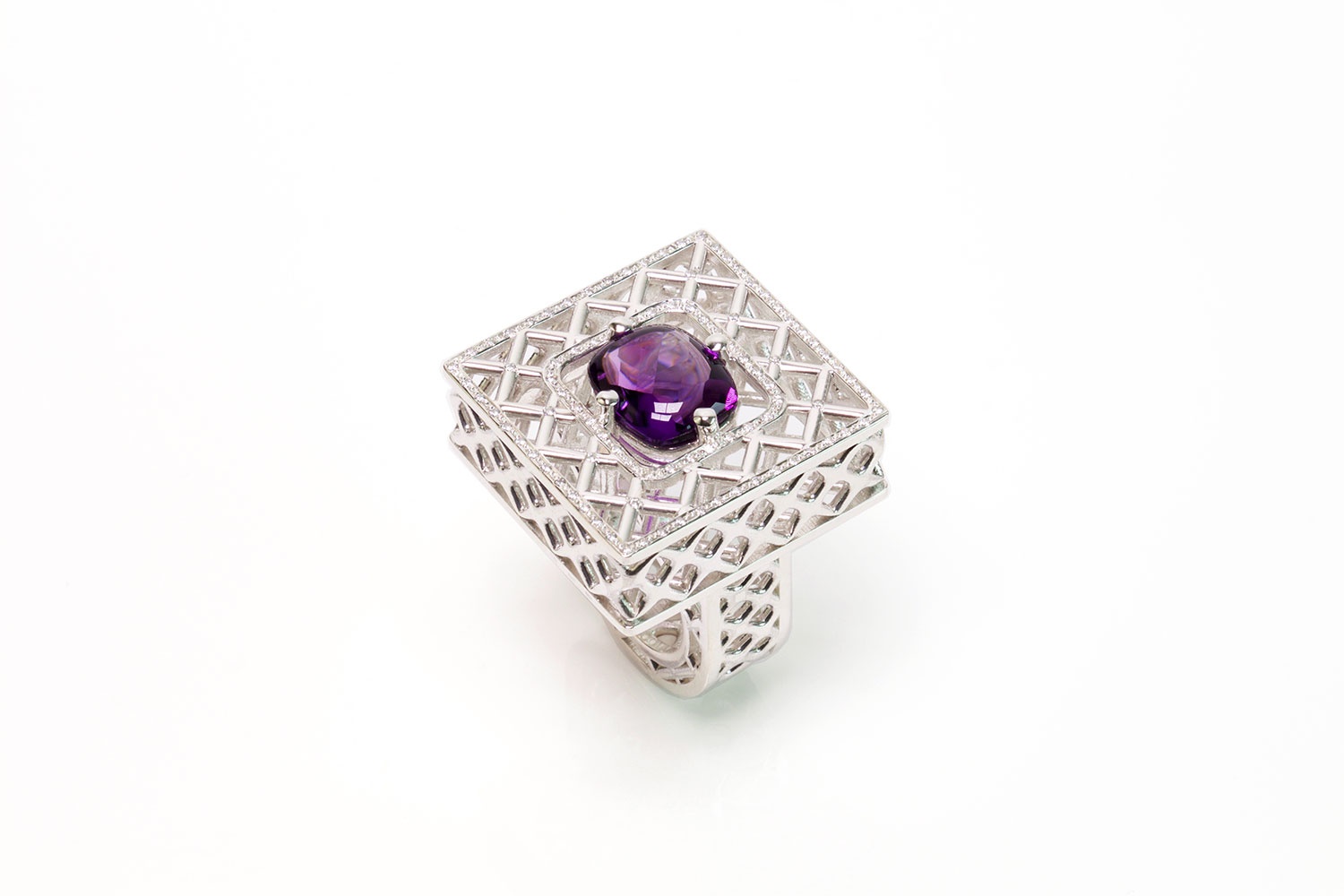
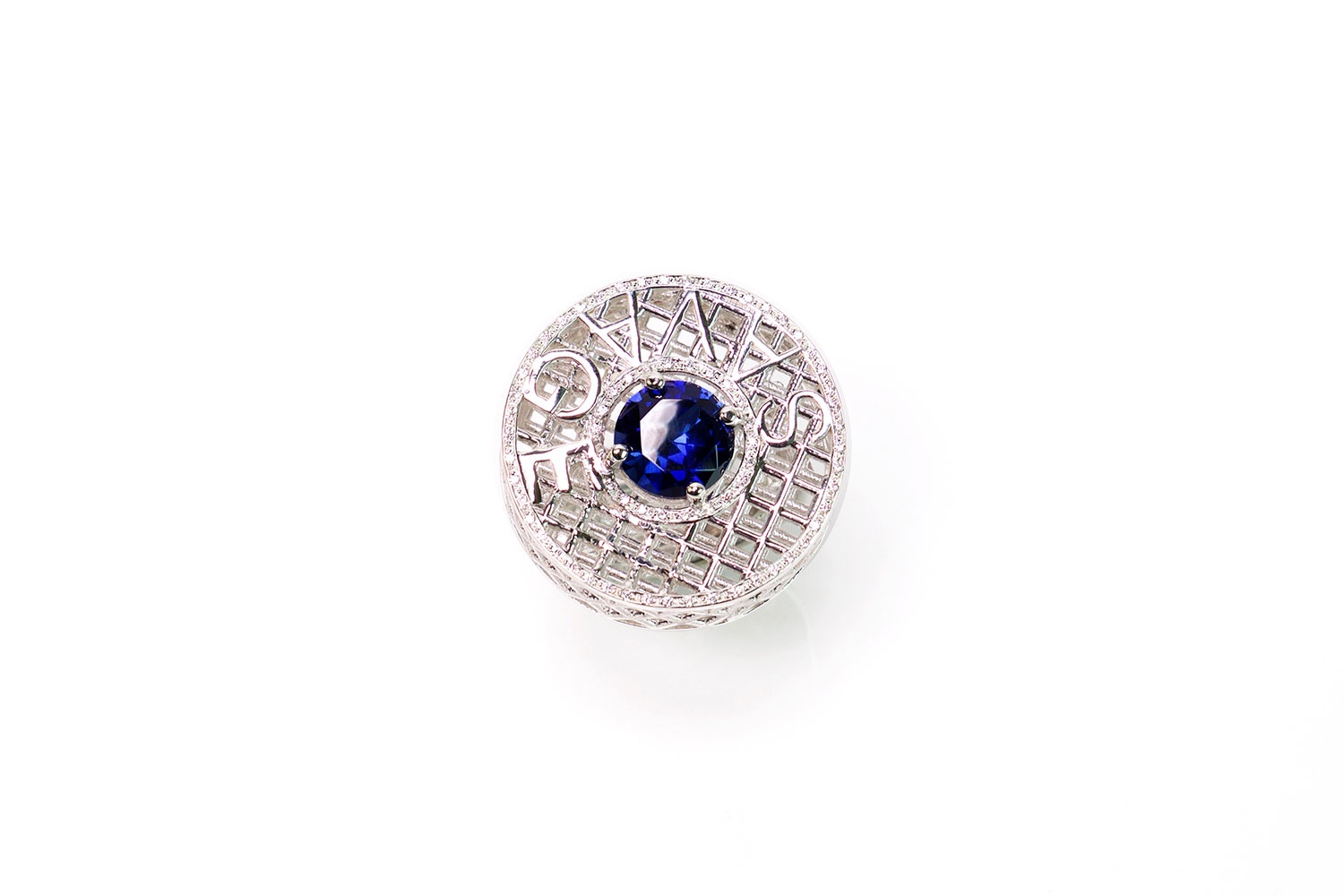
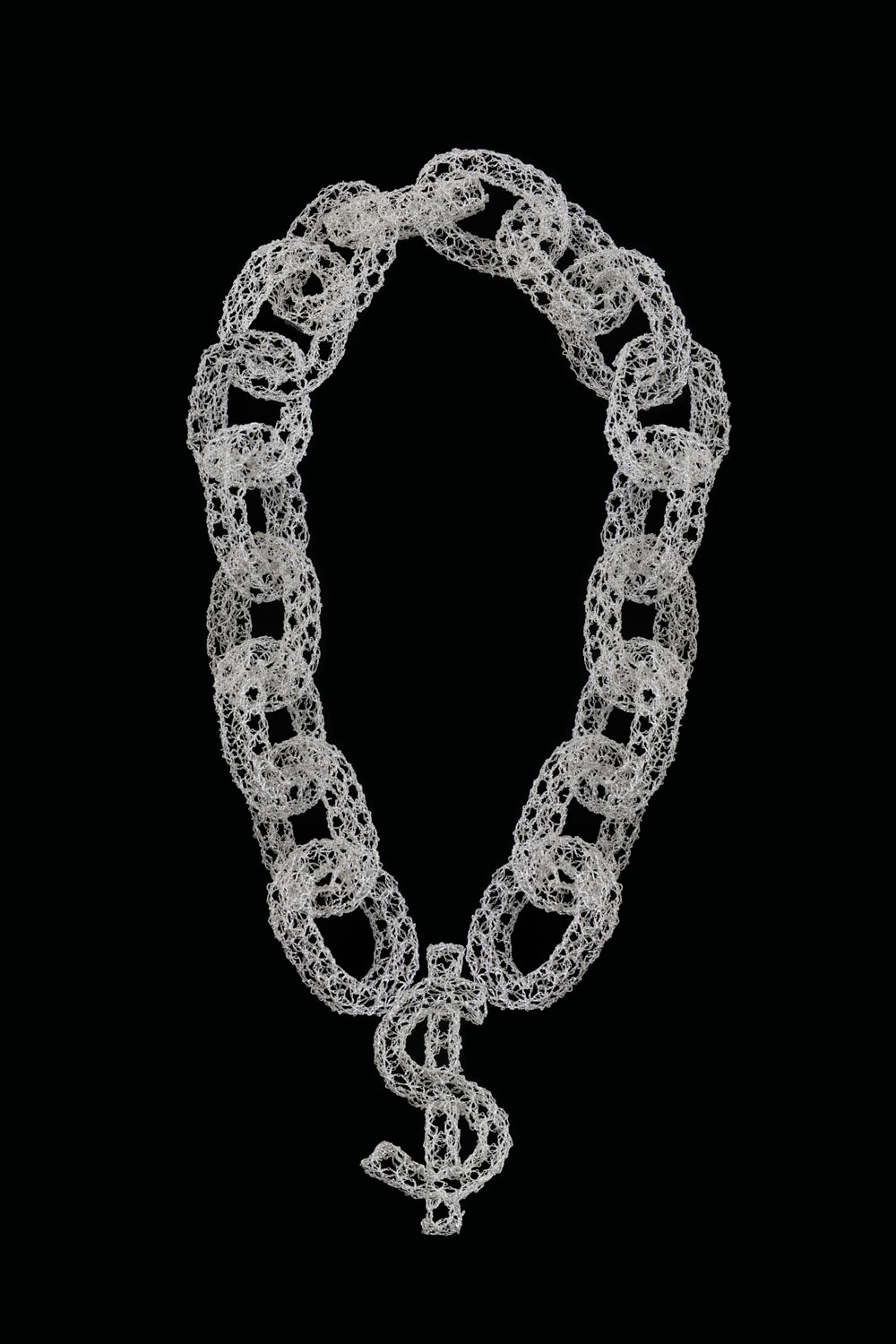

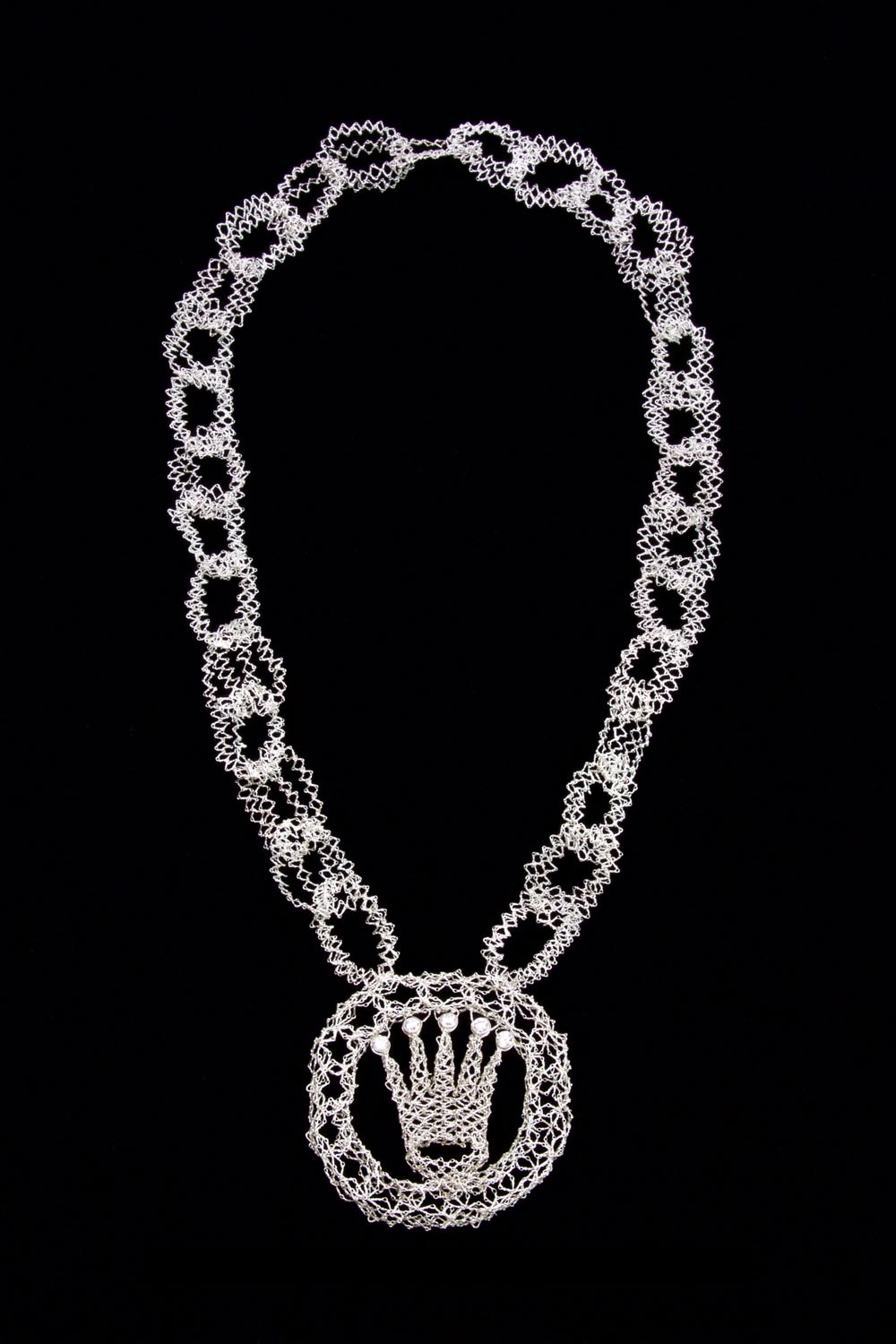

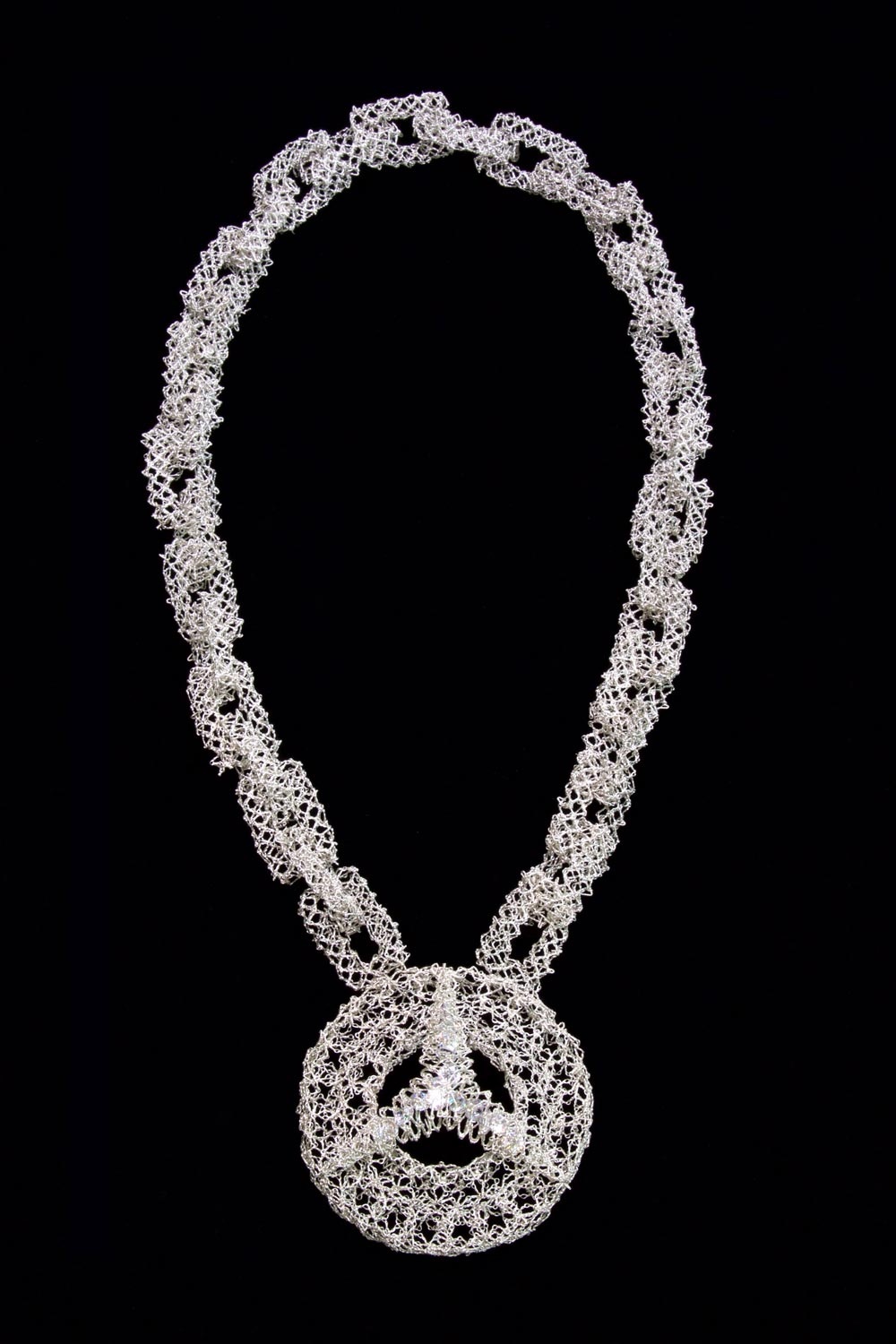

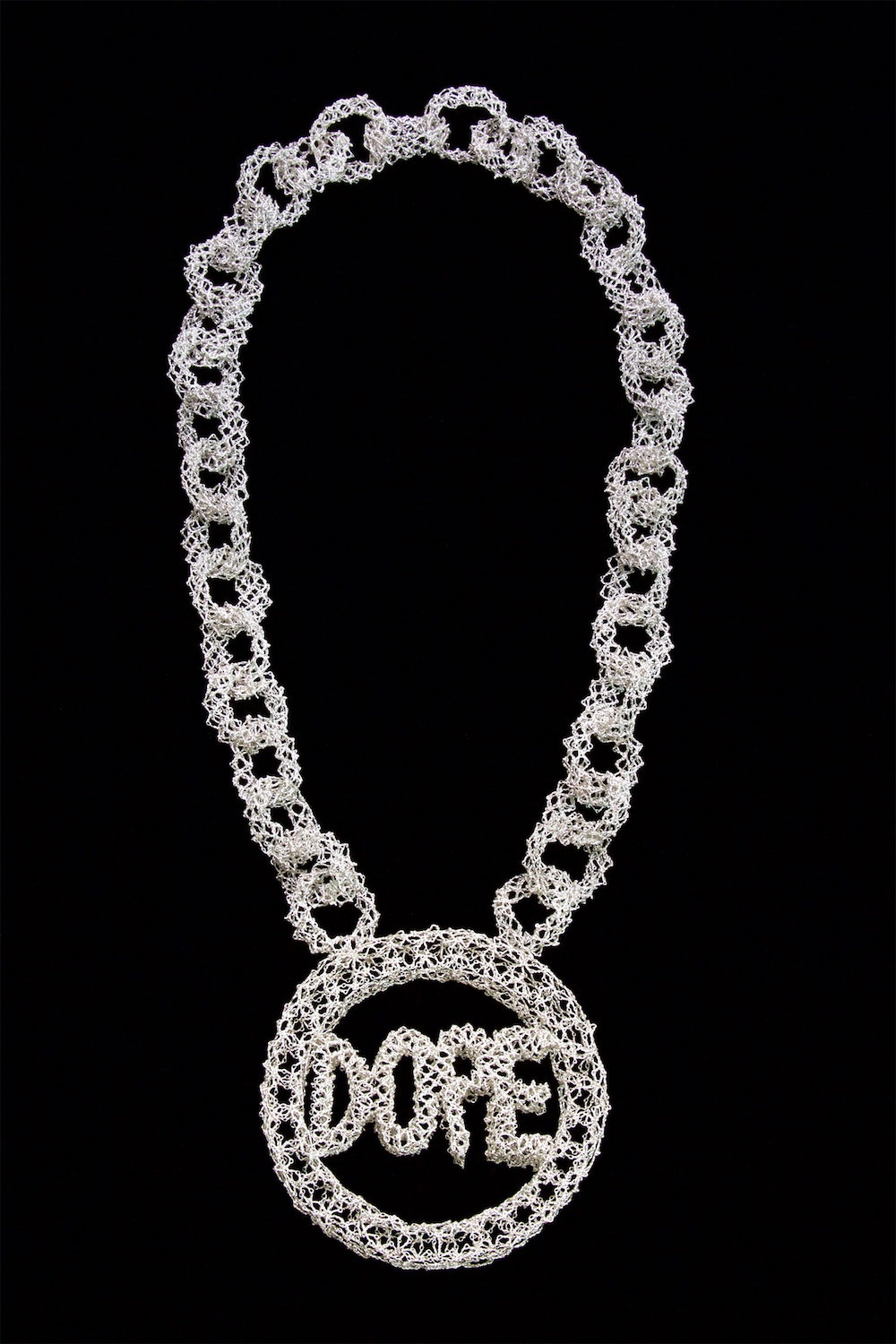
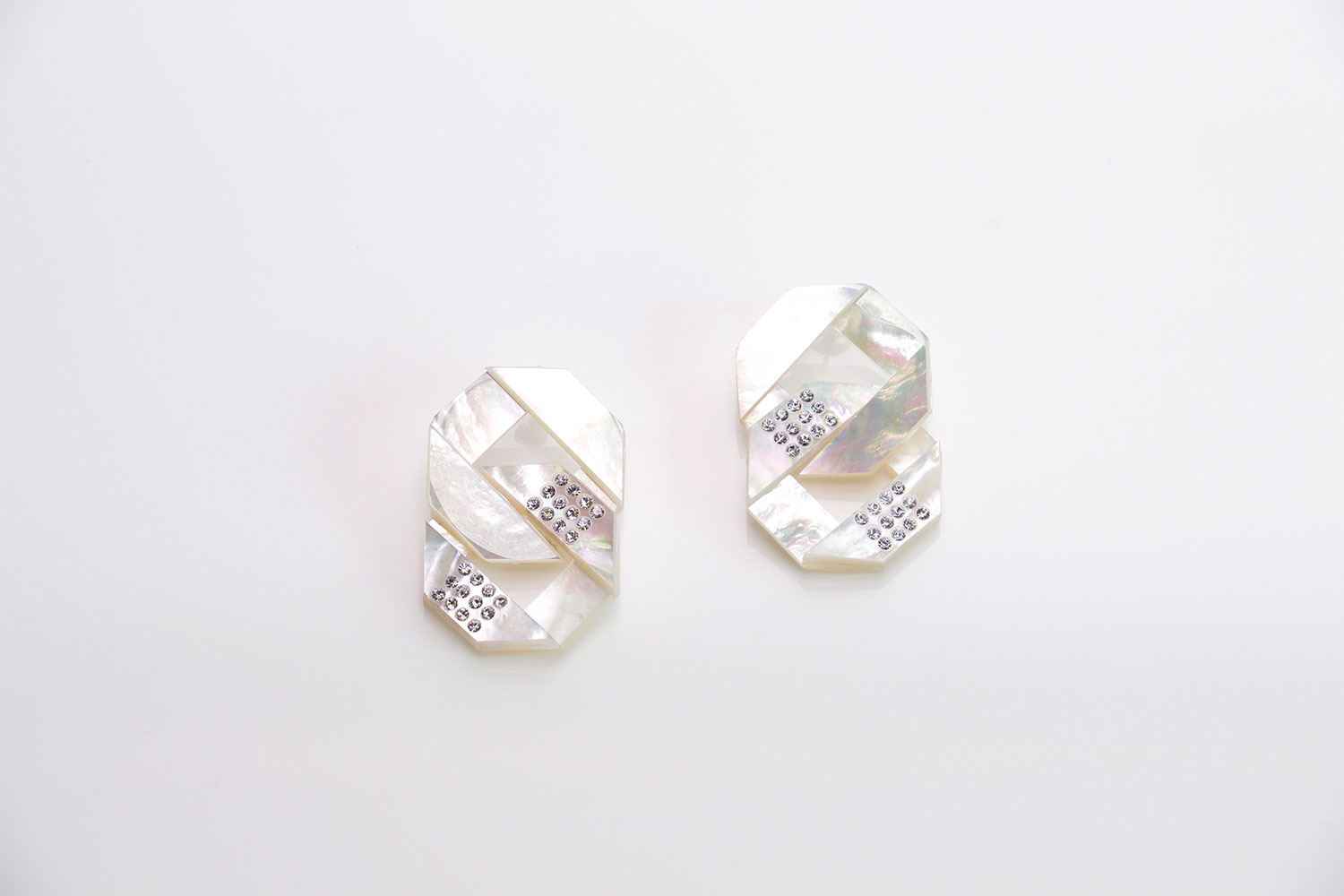
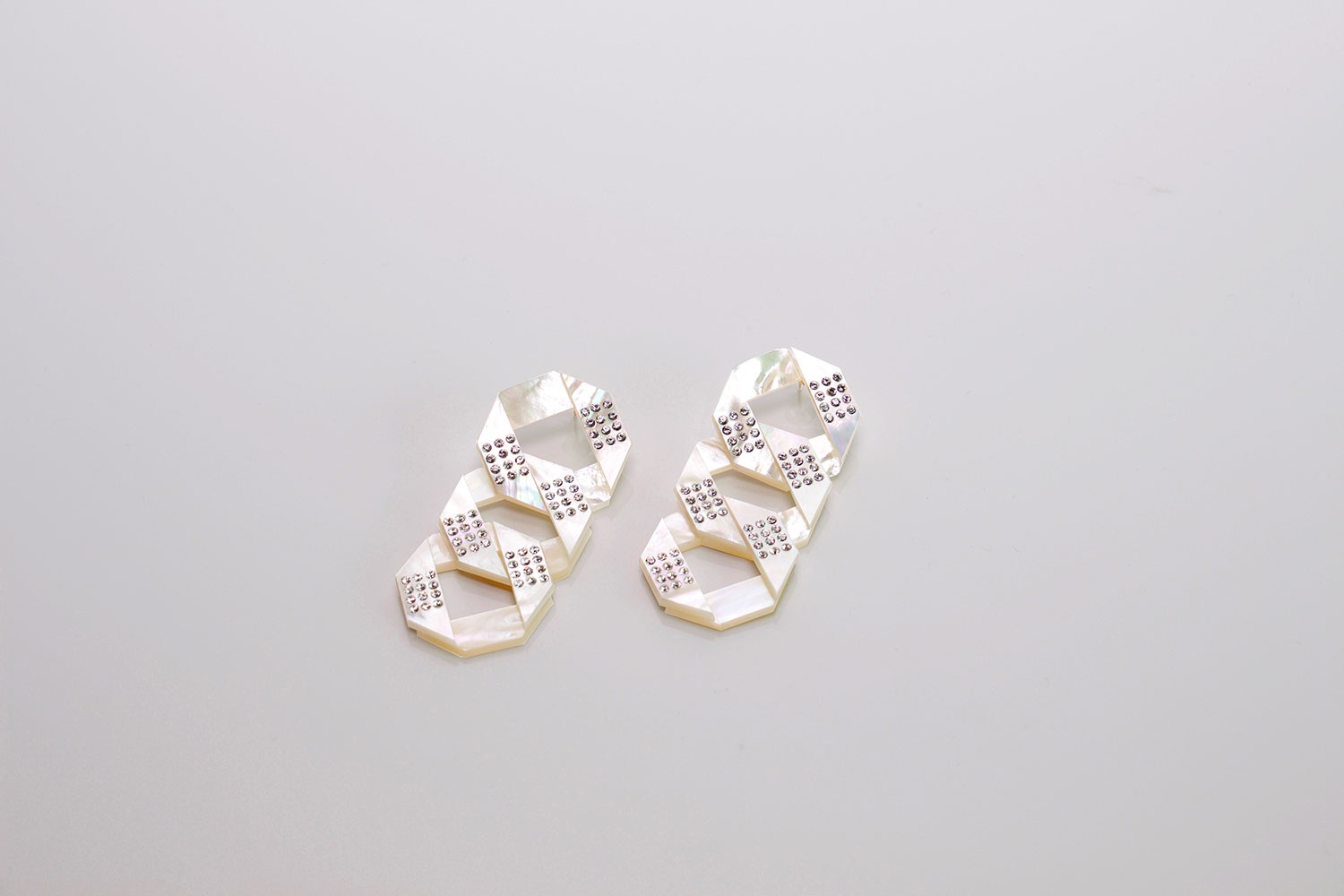

With ingenuity and sophisticated taste, Yayun’s collection offers a perspective on the way traditional craftsmanship can add value to contemporary jewellery design. By deconstructing ‘lace’, she redefines delicacy in a modern and experimental way. Rows of bobbin lace arranged in geometrical patterns interpret the concept of ‘necklace’: here, traditional techniques generate a sense of humour in contrast to the lace we see in both old master paintings and hip-hop jewellery. Every piece is filled with playful mindfulness.

After viewing Yayun’s incredible BA graduate collection at Central Saint Martins College of Art and Design this summer, we did an interview with her.
Yayun: When I first came to the UK, I’m instantly attracted to the old master paintings in the museums, especially the lace collars and sleeves the 16th-century aristocrats wear in those paintings. Even though the lace accessories look soft and delicate, I think they still represent the power. I am so curious about the traditional craft techniques behind the lace and wish to create a delicate yet powerful graduate collection like it.
I’m inspired by the hip-hop culture because I like hip-hop, rap music and the jewellery very much. I see lots of very fashionable black students at our university, and that inspire me to design something really cool for these boys and girls.

Yayun: When I first started to make the ‘lace’, I did plenty of research in old masters’ portrait paintings. I found out something very interesting: many female aristocrats in the 15th century wore many big gold chain necklaces to show their identity, power and wealth.
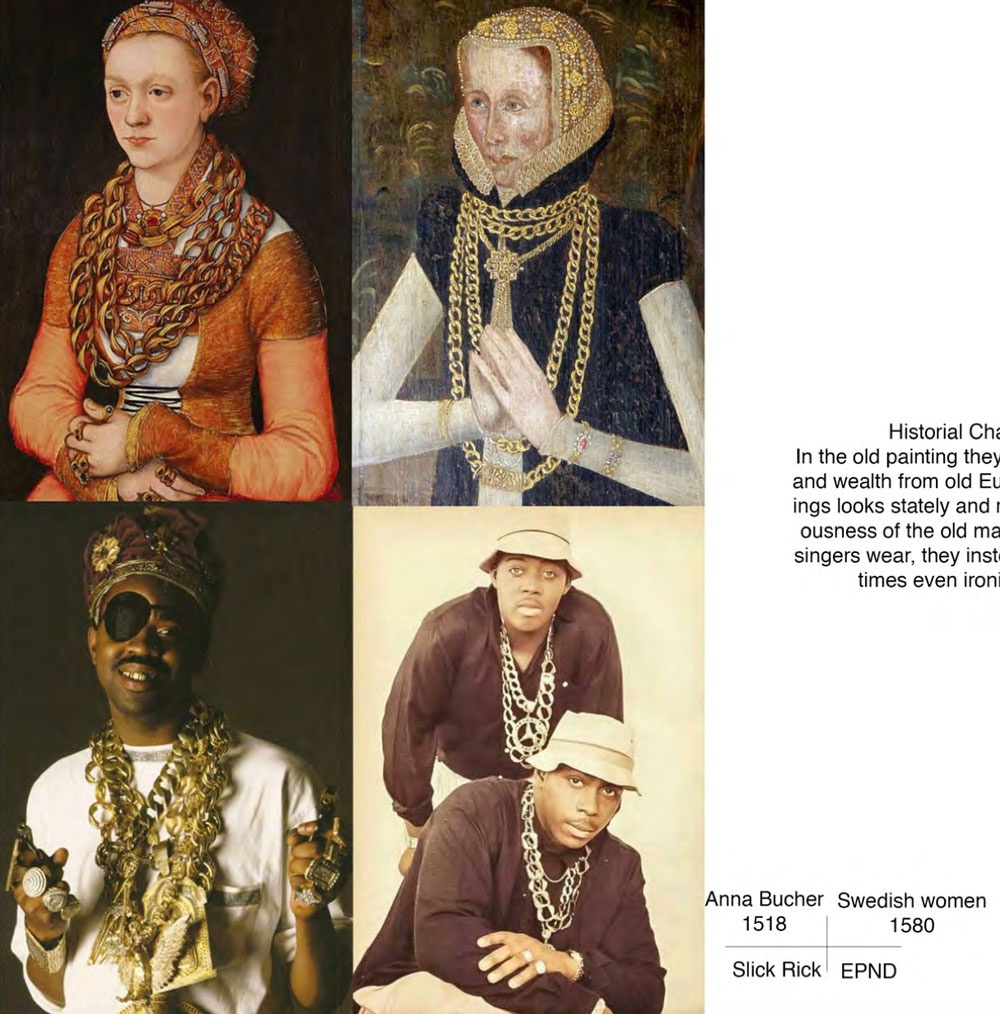
Then I think, isn’t that like the chunky gold chain necklaces the hip-hop musicians are wearing nowadays? The same gold chains have completely different visual effects due to the different wearers, eras, cultures and regions. This is an exaggerated but also humorous contract; the combination of the aristocracy and street culture becomes my main inspiration for this collection.
Yayun: Yes, the Tinplate Project can be a starting point of my graduate collection. The method I use is to crochet very fine steel wire and tinplate. I think it is very exciting to break people’s stereotype towards the materials to design and make unusual jewellery. Through the veil, I interpreted the elegant fine jewellery made by metal.
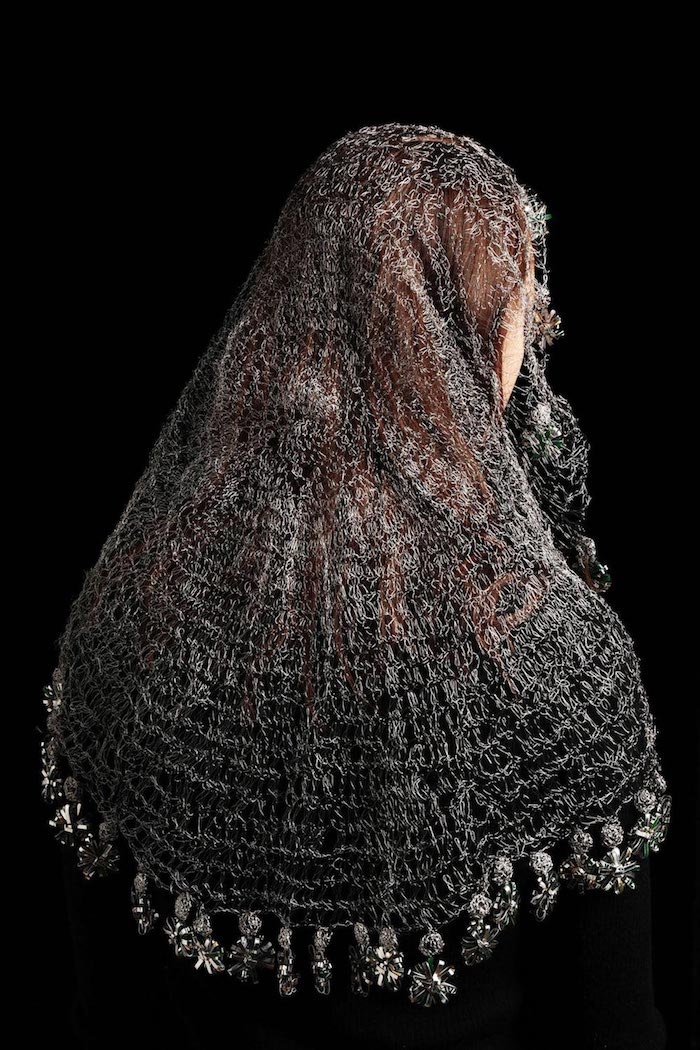
When I first learn the traditional British lace craft, I realise that it takes years and year of experience to become a master of the craft. Before I start to make the lace jewellery, I’ve only attended two days of lace-making workshop. So I can only utilise the basic technique I’ve learned and continuous experiments, to finally own my lace-making technique in a creative way.
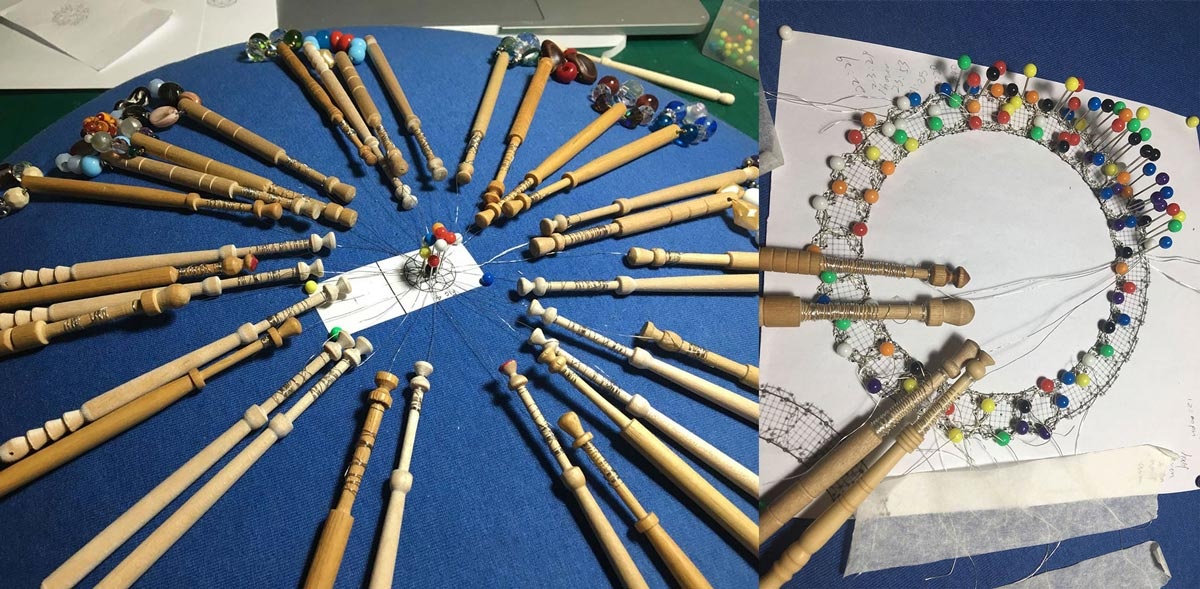
Yayun: Yes definitely. Three main challenges: the selection of metal, the design and technique for the patterns, and the patience.
Yayun: In the early stage of the process, I’ve experimented with many different metals, such as copper, steel and mix-metal wire. They all lack the ductility like the silver. Also, the colour of the silver is the closest to the original lace, so that’s why I’ve chosen to use silver.
In my research, I found that the pearl jewellery has appeared the most to pair with lace in the old master paintings. That’s why I’ve incorporated the material in my collection. I choose to make the flat gold-chain-shape bracelet with mother of pearl, as it has a beautiful sheen and can better accommodate the powerful shape and structure of my design.
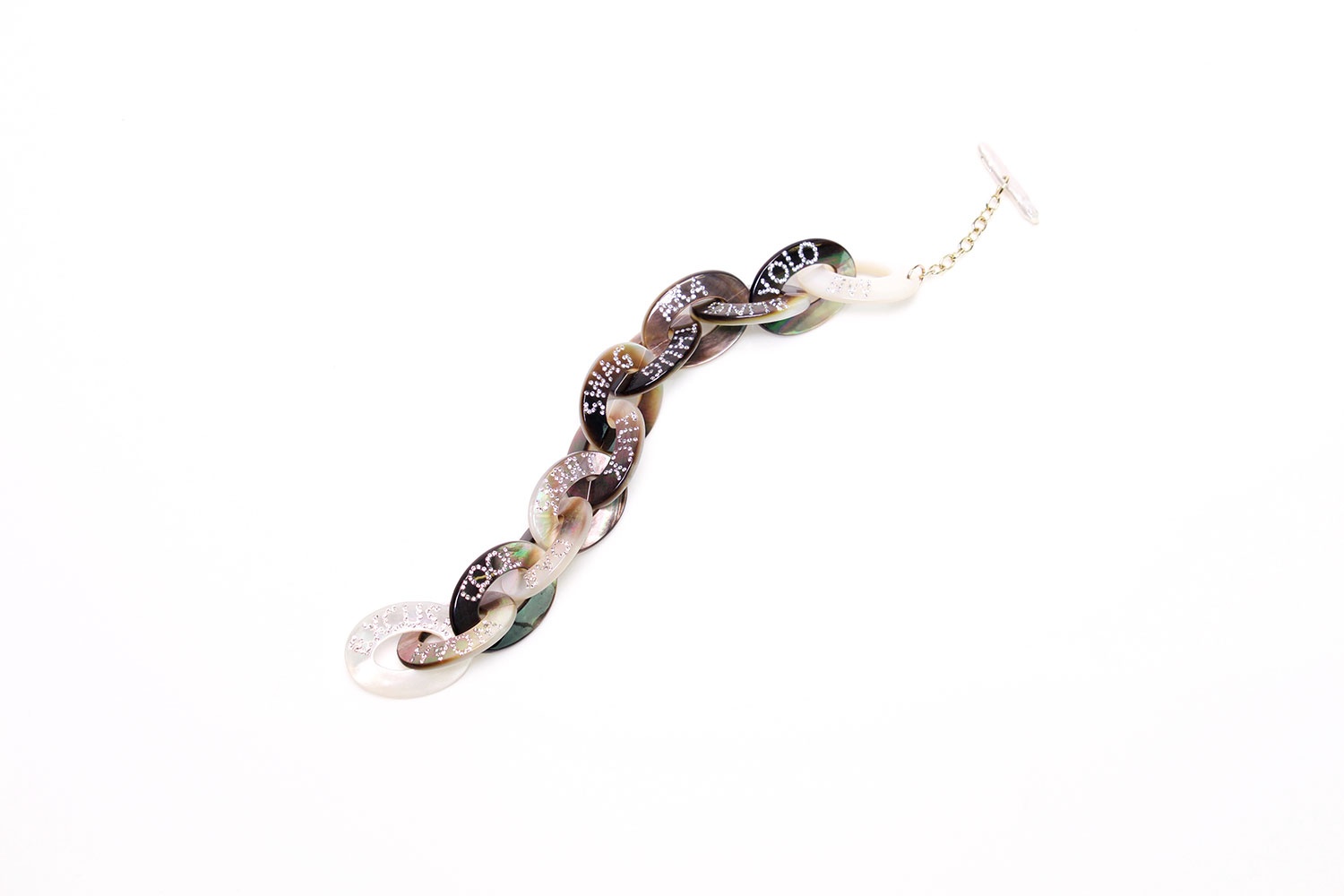
Yayun: The most enquiries I’ve got is to ask whether my lace jewellery collection is 3D printed. After I explained to them that it is made by traditional lace-making techniques, their surprise and appreciation are the best feedback for me.
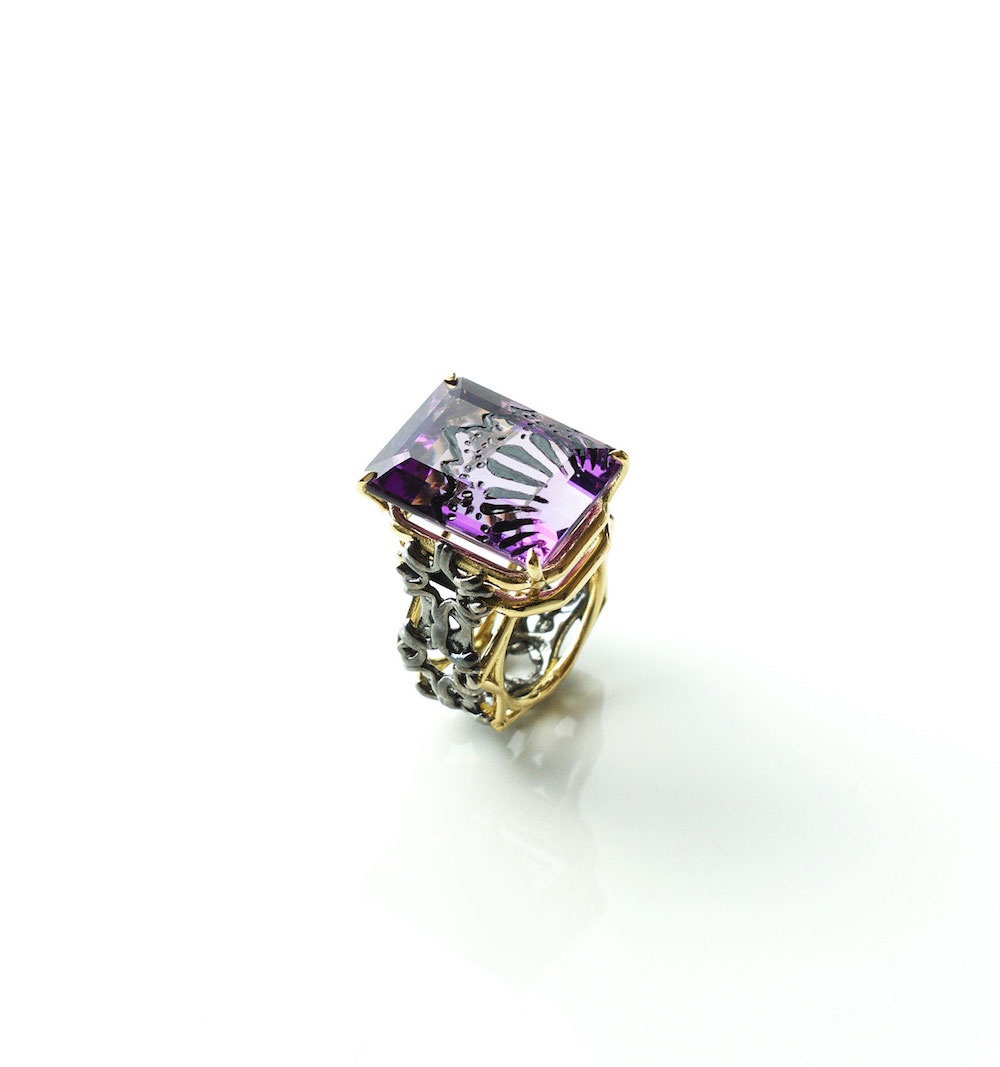
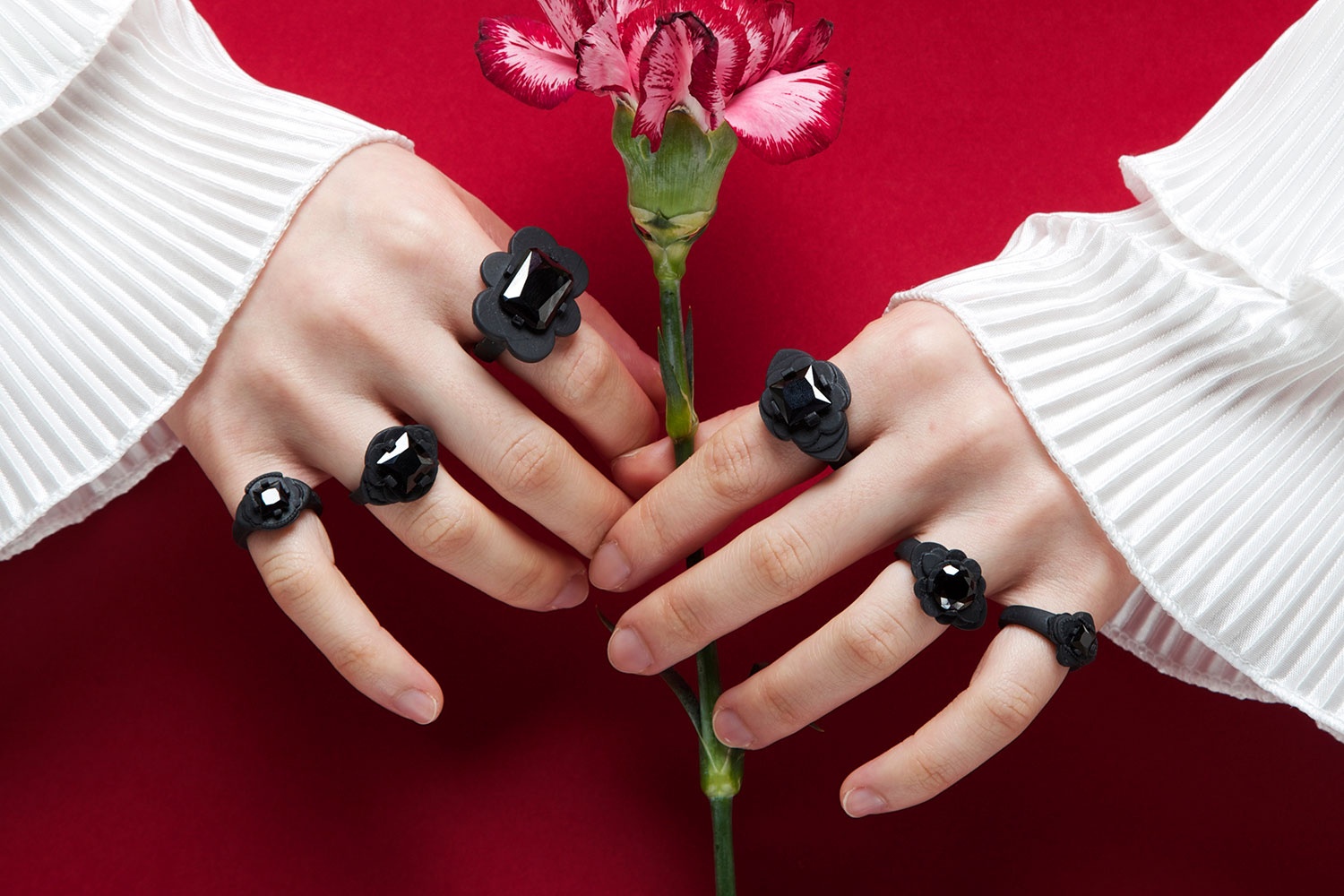
Yayun: Six Rings is inspired by an old portrait painting by Katherine Parr from the Tudors, where the main character wears six rings. I used the computer to restore the unclear image of the rings in the painting, machine-printed them out using black resin, and inlaid precious gems in them. It is a reflection of the mutual existence and influence between the modern technology and ancient cultures.






Copyright @ 2019 China Design Centre Ltd. Privacy policy | Disclaimer

1 / 31
show thumbnailsnext picture previous picture start slideshow close lightbox